Single panels, storm damage, discontinued models
One cracked or failed panel does not mean a new system. We replace damaged panels with a match that works with your inverter and racking, on any brand of system.
Request Solar RepairLow output is not always the panel. A failed microinverter, optimizer or connector looks the same in the app, so we test before we replace anything.
Panel models change every year or two, so the exact model on your roof is often discontinued by the time one fails. That is a solvable problem, but it has to be engineered rather than guessed.
On a string inverter system, every panel in a string carries the same current. A replacement with a lower current rating holds back the whole string, and one with very different voltage can push the string outside the inverter’s limits. We compare the ratings on the original label with candidate panels and check the result against the inverter. Microinverter and optimizer systems are more forgiving because each panel works on its own, but the replacement still has to fall within the ratings of the device under it.
Panel sizes and frame depths vary. The replacement has to fit the rail spacing and clamps, and in a tight array it has to fit the gap the old panel left. We source used or surplus panels of the original model when that is the best match, or a current panel that fits both electrically and physically.
A newer panel can look slightly different in color or frame. When it matters to you, we can place it where it is least visible and move an original panel into the visible spot.
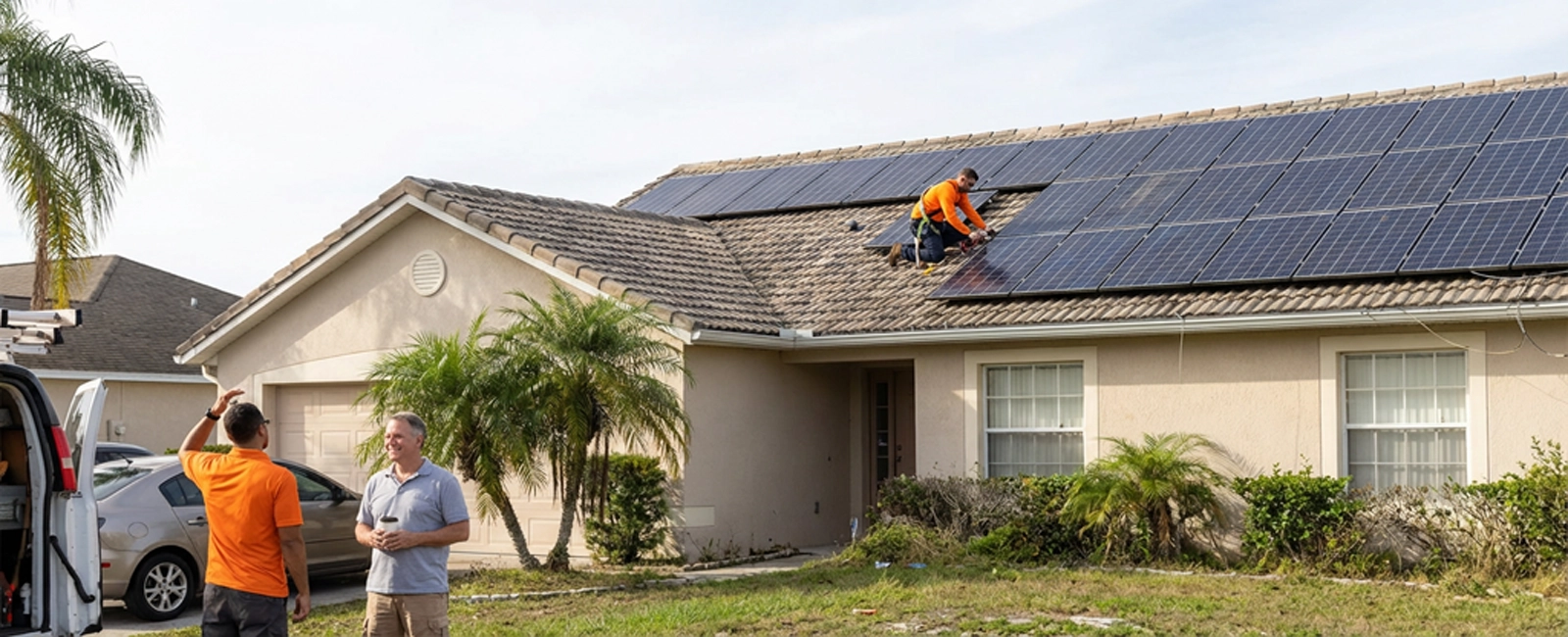
Florida panels are built to take wind and rain, but a falling limb, flying debris or hail can still break glass or bend a frame. After a storm, look at the array from the ground and check your monitoring for a drop in production. Do not climb onto the roof, and do not touch a broken panel or loose wiring. Damaged panels can still produce voltage in daylight.
We inspect the panels, racking, wiring and roof attachments, because a strike hard enough to break a panel can also loosen a mount or damage a cable. Then we make the system safe, replace what was damaged and test it.
Storm damage is generally a homeowners insurance question, not a warranty question. Panel warranties cover manufacturing defects and power loss beyond what the manufacturer promised, not impact or weather. Whether your policy covers the panels and at what deductible depends on your insurer, so call them early.
We help with the paperwork side: photos of the damage, a written inspection report and an itemized repair estimate you can give your adjuster. We do not negotiate claims for you.
When a panel failed on its own, such as a junction box failure or delamination without any impact, the manufacturer warranty may apply. Like inverter warranties, panel warranties stay with the equipment when an installer closes. We check the serial number and file the claim where it is covered. Inverter problems are covered on the solar inverter repair and replacement page.
Replacing a few panels is almost always the right call when the rest of the system is healthy. When many panels across an older array are showing the same defect, or the system was undersized from the start, we explain the cost of replacing panels one at a time against the cost of a planned upgrade, and you decide. If the roof under the array also needs work, the panels come off once for both. See solar panel removal and reinstall and solar roof leak repair.
Replacing panels on a solar pool heater is a different job. See solar pool panel replacement. All of our repair services are on the solar repair and maintenance page.
Yes. We replace single panels on systems of any brand, matching the electrical ratings and mounting to the rest of the array.
We look for the original model from surplus sources first, then for a current panel whose ratings and size work with your inverter, optimizers or microinverters and your racking.
Not when it is matched correctly. On string systems a poorly matched panel can limit the whole string, which is why we check the ratings against the inverter before installing anything.
Many policies treat roof mounted solar as part of the home, but coverage and deductibles vary. Ask your insurer. We provide photos, an inspection report and an estimate for your claim.
Generally no. Panel warranties cover defects and excess power loss. Impact and weather damage is usually an insurance matter.
It can be. A cracked panel still produces voltage in daylight and lets moisture reach live parts. Keep clear of it and have it taken out of service.
Florida Solar Contractor #CVC056660 · Electrical Contractor #EC13005027 · BBB A+ · Serving Florida since 1999 · 4.9 Google rating
Call 866-412-4218. We answer the phone.
A free Solar Home account keeps your panels, inverter, batteries, pool heater or water heater on record: models, serial numbers, photographs of the labels, warranties, utility and interconnection documents, and every AllSolar service visit attached to your property.
Free to read first, no account needed: the Solar Home guides explain how to identify your equipment, what your production figures mean and what the common warnings are telling you.